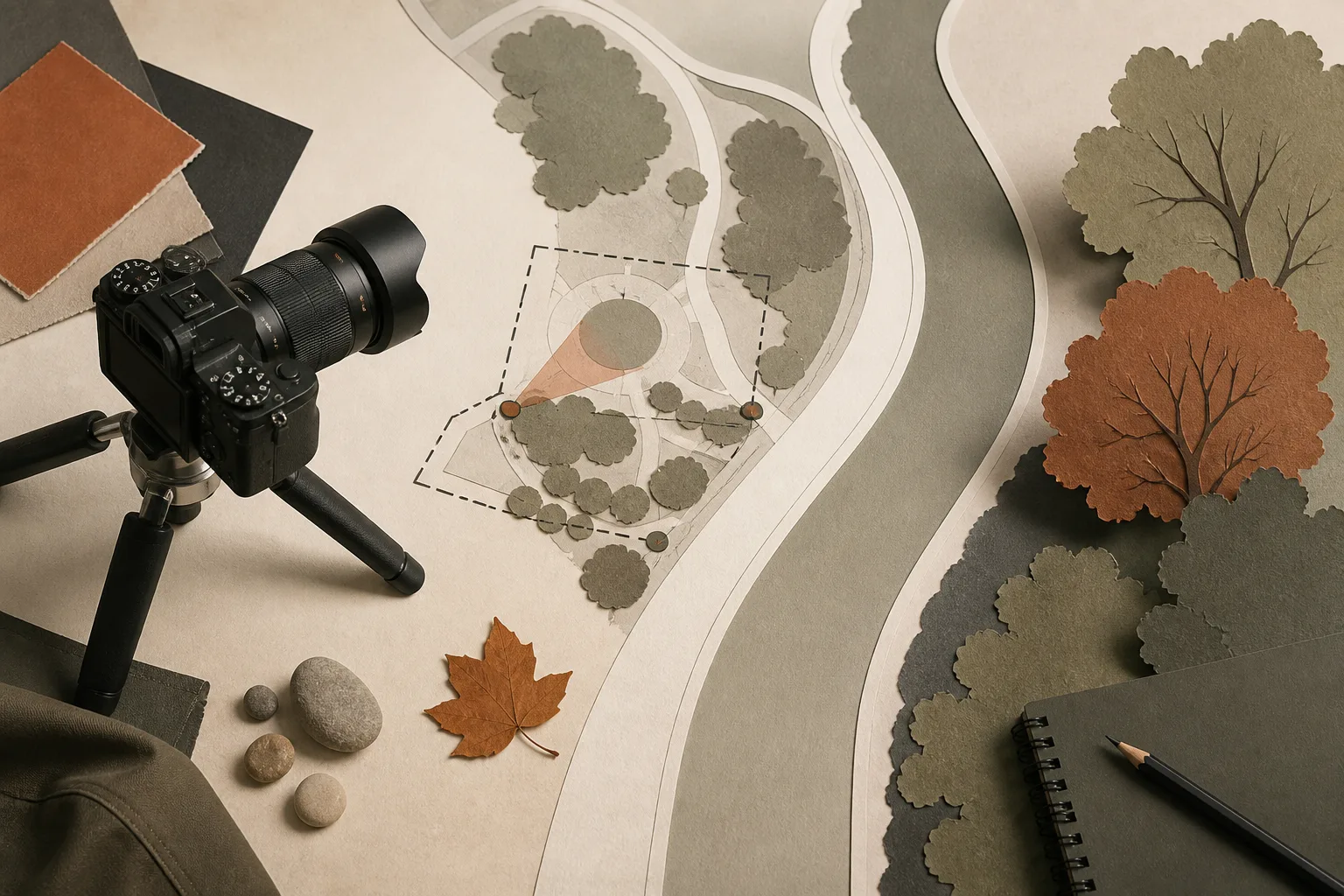
A tripod, bags, subject, and photographer can spread across a walkway while everyone concentrates on the frame. The production should shrink around the public, not require the public to move around the production.
Read the route before choosing the frame.
Check entrances, steps, narrow paths, benches, bicycle lines, and the directions people approach from. Any space required for ordinary movement is not part of the set.
Choose a retreat position before traffic increases.
Keep equipment inside one compact footprint.
Close and group anything not in use. Avoid leaving a bag behind the operator or spare equipment beyond the visible setup. Keep tripod legs no wider than stability requires.
Put the subject’s waiting position outside the route as well.
Stop the shoot, not the pedestrian.
When someone approaches, pause capture first. Do not ask ordinary users to hurry or wait because a take is running.
For video, wait for a natural gap. If the required duration is not available, change the angle or the location.
In public space, ordinary use takes priority over production continuity.
Share a clear exit signal.
Agree on the conditions that end the setup: congestion, a request from management, weather, or visible discomfort around the crew. A shared signal prevents a long discussion while equipment remains spread out.
Afterward, check for forgotten items and restore the area.
Field sequence
- Identify the public route and retreat position
- Keep bags, stands, and waiting positions together
- Pause when another user approaches
- Reframe or relocate when the route stays busy
- Restore and inspect the area before leaving