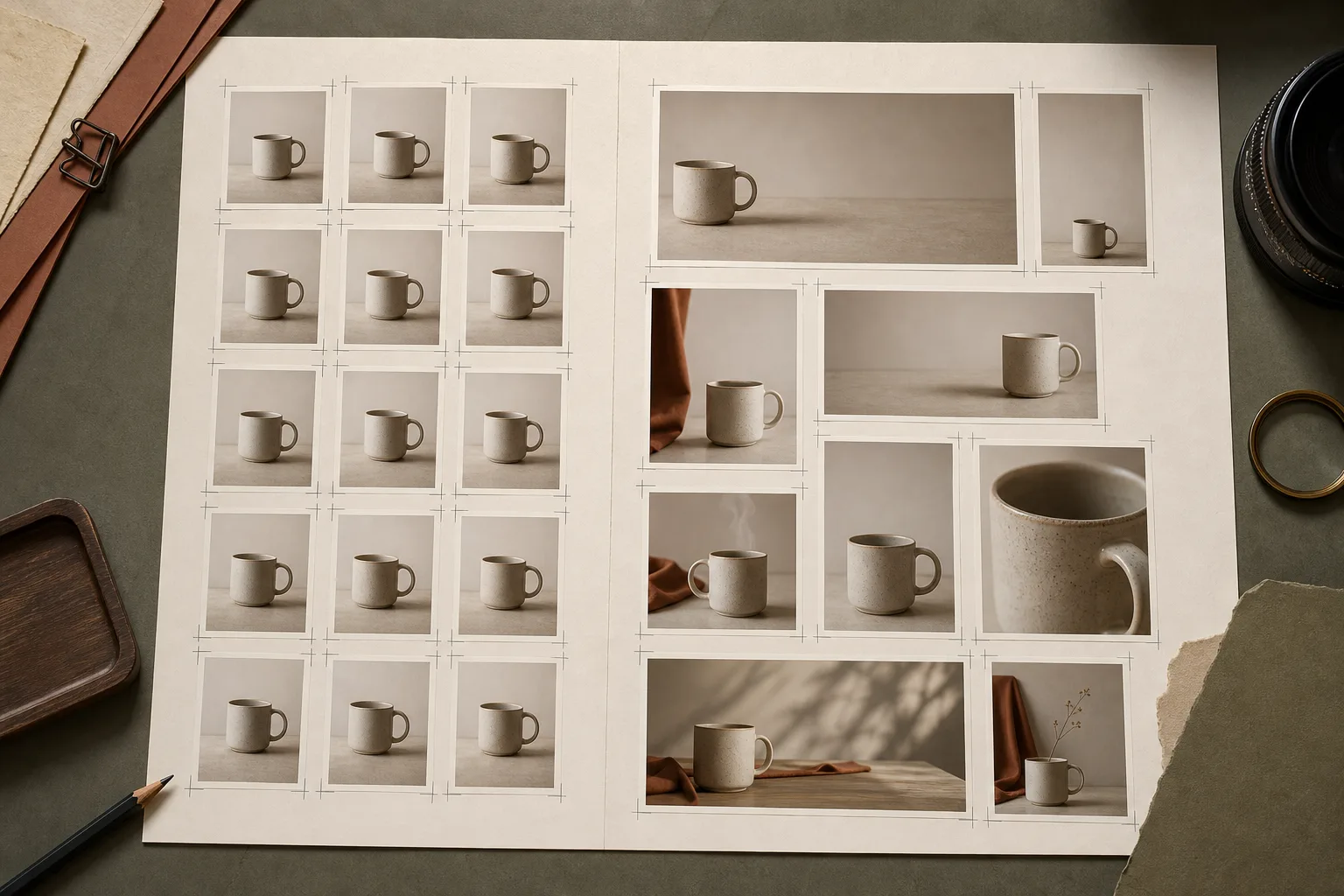
A large shoot can still produce a very small set of commercial choices. Variation should be judged by the decision it gives the buyer: a different layout, crop, moment, detail, orientation, or use—not by whether the photographer remembers pressing the shutter again.
Ask whether the difference changes the buyer’s decision.
A cup moved a few centimeters may be a separate capture while remaining the same commercial option. A frame with left-side copy space, a vertical layout, and a close detail each solve a different design problem.
Place two frames together and finish the sentence: “Choose this one when…” If both answers are effectively identical, the variation may be too small to earn another place in the set.
Change one useful variable at a time.
If direction, distance, background, light, action, and props all change at once, the lesson disappears. Establish one reliable base frame, then change a variable that creates a clear buyer benefit.
When the subject moves from left to right, turn the new negative space into usable copy space. When the camera moves closer, reveal material, operation, or detail that the wider frame could not show.
Increase the number of uses—not merely the number of files.
Assign roles before the shoot.
A practical shot list might include a base horizontal frame, copy space on both sides, a vertical composition, a wide environmental view, an essential detail, and two stages of an action. The right list changes with the subject.
The objective is not to complete a ritual checklist. It is to leave the production with genuinely different uses. Never add unsafe positions, uncleared property, or confusing props merely to make the set appear larger.
Use the contact sheet to expose repetition.
Review the complete shoot at thumbnail size before judging individual sharpness. Frames that cannot be distinguished when seen together often compete for the same role. If only focus or a tiny expression changes, keep the strongest execution.
Select one representative for each meaningful role: orientation, copy space, distance, action stage, or detail. A tighter set also reduces editing, metadata, rights review, submission, and future retrieval work.
A crop does not always create another asset.
A wide capture may allow a vertical or detail crop, but every crop removes pixels and can expose focus or noise problems. When the required orientation and distance can be captured deliberately, that source is usually stronger.
Color changes, mirrored frames, and minor retouching do not automatically create another buyer purpose either. Check the destination’s current rules and keep only differences that remain useful in the finished file.
Record the roles that survived, not only the acceptance count.
Keep captured, selected, submitted, and accepted counts separate. Then add which roles survived, where the set became repetitive, and which intended use was missed.
A high acceptance count can still describe a narrow set of nearly identical options. Count how many distinct, finished buyer choices the production created, then use that evidence to revise the next shot list.
Six roles to test with one subject
- A dependable base composition
- Copy space on the left
- Copy space on the right
- A vertical layout
- A wider environmental frame
- An essential detail or a different stage of action