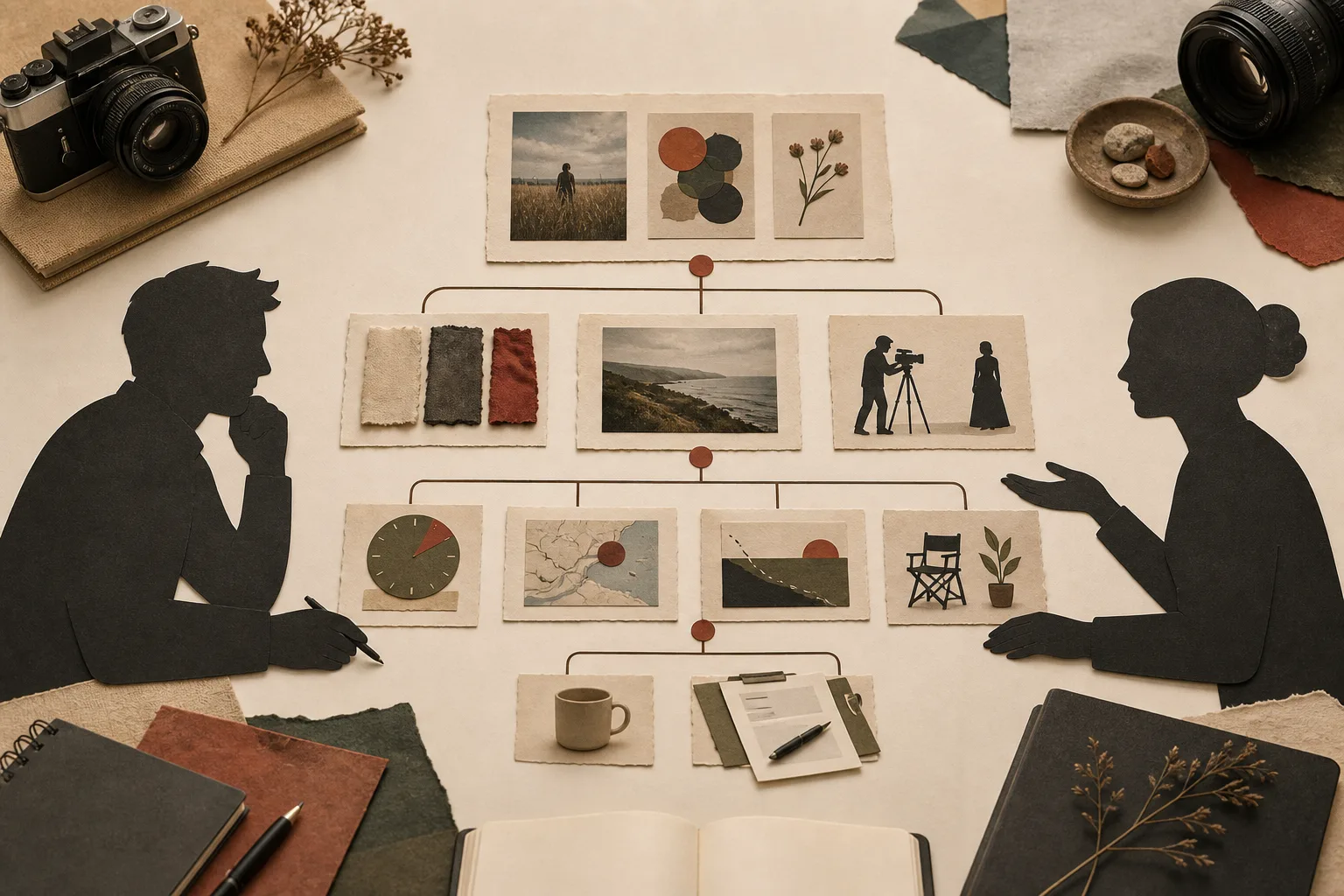
A familiar assignment to the photographer may be unfamiliar to the person in front of the camera. Without a clear brief, assumptions about wardrobe, action, publication, time, and physical effort arrive at the set unresolved. A concise shared document makes the production easier to understand before anyone commits.
Explain the possible use in ordinary language.
Say that third parties may license the photographs for advertising, websites, articles, or other permitted uses. Make clear that this is not only a portrait session or promotion controlled by the photographer.
Do not promise a specific placement you cannot know. Separate the uses you can describe from decisions that a future licensee or platform may make.
Share enough detail to make the day predictable.
Include the location, approximate start and finish, travel, indoor or outdoor conditions, wardrobe, props, changes, actions, breaks, refreshments, expenses, and compensation. Reference images can show direction without promising an identical result.
Standing, walking, or repeating a gesture can become tiring. Consider weather, footwear, mobility, privacy, and the physical demands of the plan.
State what can be declined or stopped.
Conditions can change after an initial agreement. Make clear that an unsafe location, painful pose, uncomfortable wardrobe, or unexpected action can be declined.
Do not treat silence or social pressure as agreement. When the content changes, pause and confirm the new request.
A good brief makes both “yes” and “no” safe, informed answers.
Keep the explanation and release aligned.
The conversation, written brief, and release should describe the same production and permission. Allow time for questions before requesting a signature.
For minors, people requiring additional support, or group shoots, identify the appropriate consent, guardianship, and contact requirements before the day.
Record changes and the post-shoot contact route.
Document changes to location, wardrobe, content, timing, expenses, or compensation. Share how and when questions or promised materials will be handled after the shoot.
The collaboration does not disappear when the equipment is packed. Keeping the agreement and its records secure remains part of people production.
Include in the brief
- Licensing purpose and possible publication
- Location, schedule, travel, wardrobe, and actions
- Compensation, expenses, breaks, and safety
- What can be declined or stopped
- Release terms and post-shoot contact