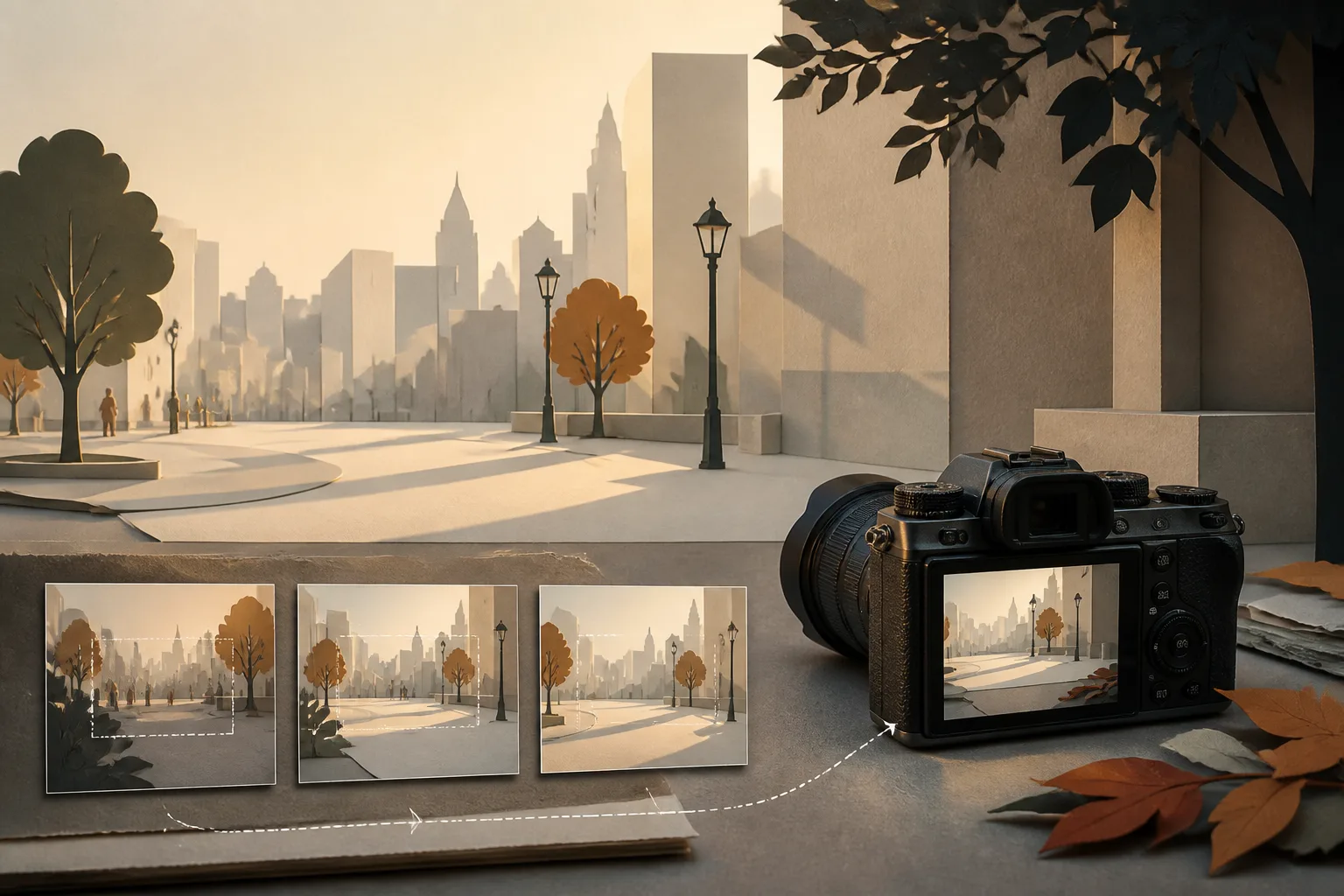
Waiting for a tourist site or park to become empty is not yet a plan. Time, weekday, weather, entrances, signals, and transport patterns can make a clean interval more predictable.
Choose time from the way the place is used.
Dawn may be quiet in one location and busy with commuters or deliveries in another. Consider opening hours, schools, events, cleaning, and seasonal patterns.
Do not turn one visit into a permanent rule. Conditions change.
Observe the short cycle of movement.
Traffic lights, trains, tour groups, and parking entrances create pulses. Watch for several minutes, then finish composition and settings before the next gap.
Be ready when the space clears rather than starting setup at that moment.
Use position and framing to control entry points.
Place likely entrances near a visible edge so movement is easier to notice. Test height, lower angles, longer focal lengths, architecture, and planting as natural screens.
Check that solving the intrusion has not removed the useful context or copy space.
A clean frame is usually the result of selected time and position, not luck.
Compare a field retake with a later removal.
A still-image edit can leave problems in shadows, reflections, or overlap. Video requires continuity across many frames and is substantially less forgiving.
If a short wait produces a cleaner source, reshoot. When editing is appropriate, preserve the original and confirm the destination’s current rules.
Clean-frame plan
- Check weekday, time, weather, and nearby activity
- Observe the movement cycle
- Frame with entry points visible or excluded
- Wait with settings already complete
- Choose retake or removal from total effort and risk