A first month can disappear into random walks, new settings, and folders full of near-duplicates. Volume matters, but only when each session leaves behind a lesson, a usable file, or a clearer reason to change the next attempt.
Give every session one job.
Choose a single variable before leaving: shutter speed with moving subjects, depth of field across a small scene, window light at different distances, clean copy space, or a short sequence of stable video clips. Keep the rest of the setup familiar.
A narrow brief makes failure readable. If exposure, lens, lighting, subject, location, and direction all change together, it becomes difficult to know which decision produced the result.
Finish small sets instead of collecting starts.
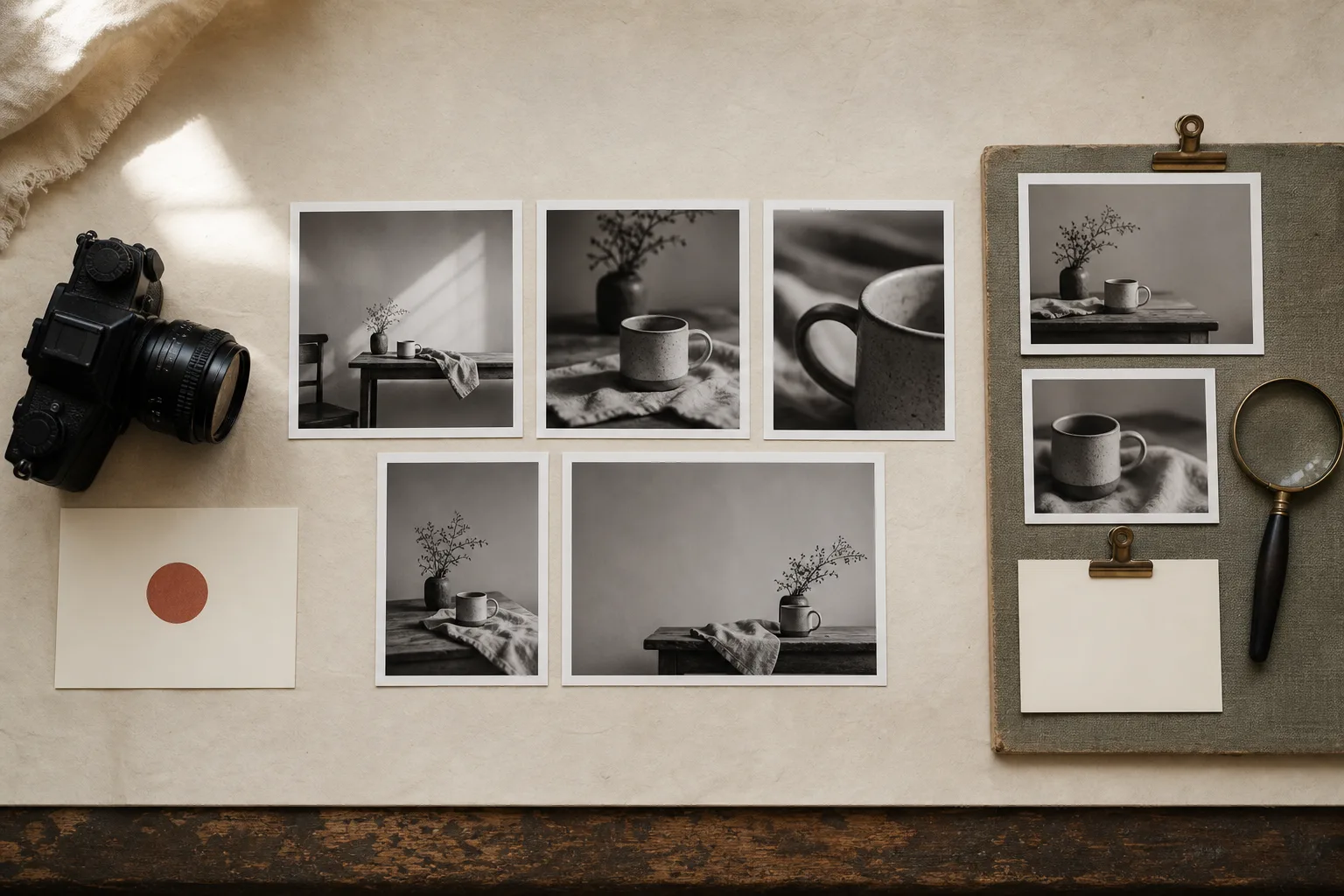
A useful practice session can end with five distinct frames rather than hundreds of similar files: a wide establishing view, a clear main action, a close detail, a vertical option, and a frame with copy space.
The set teaches continuity and coverage. It also forces the creator to move beyond the first attractive composition.
Repetition builds speed. Review turns speed into judgment.
Separate the shoot from the verdict.
During capture, protect focus, exposure, safety, and the brief. During review, ask different questions: Is the subject immediately clear? Is there a believable use? Are logos, artwork, property, or people creating rights concerns? Does another file already do the same job better?
Do not let one rejection or one download rewrite the entire lesson. Platform outcomes contain information, but they are not controlled experiments.
Make consent part of the exercise.
When another person participates, explain the purpose, likely distribution, what they will receive, and what paperwork may be required before the camera comes out. Practice is not a loophole for unclear expectations.
If the intended use changes later, stop and ask again. A technically useful file is not commercially ready when the rights record is incomplete.
Promote only what survives the workflow.
A portfolio candidate should remain strong after culling, full-size inspection, editing, metadata, rights review, export, and backup. Completing the whole path exposes bottlenecks that camera practice alone cannot reveal.
At the end of the month, count finished, distinct, retrievable assets—not shutter presses. Then choose the next month’s brief from the step that created the most waste.
A repeatable session card
- One subject and one learning goal
- Five genuinely different frames
- One full-size technical review
- One complete edit-to-backup workflow
- One sentence defining the next attempt