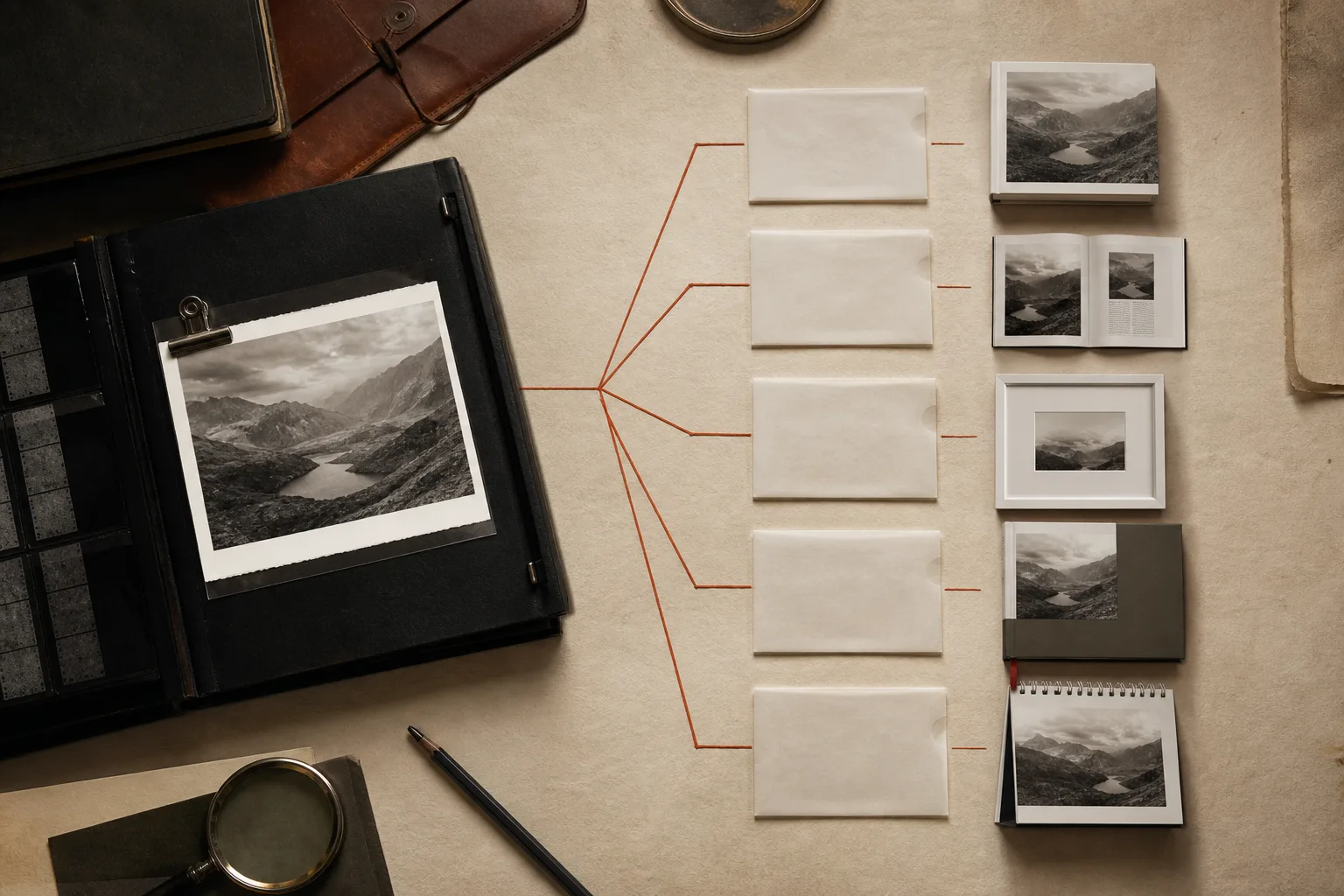
A stock customer usually pays for permission to use an image or clip under a defined license. The customer does not normally purchase the creator’s copyright or take ownership of the original work.
Royalty-free does not mean free of charge.
The phrase describes a licensing structure. After paying for a license, a customer may be able to reuse the asset within the permitted scope without negotiating a new royalty for each individual use. The exact limits still depend on the platform and license tier.
The creator is licensing a right to use.
Thinking in terms of licensing is more accurate than saying a file was “sold.” One asset can be licensed more than once, to different customers, while the creator generally retains copyright unless a separate agreement says otherwise.
“The asset stays in the archive. A defined right to use it travels to the customer.”
Language matters when people appear in the work.
“I want to sell your photo” can sound as if a person’s identity is being transferred to an unknown buyer. A better conversation explains the possible commercial uses, the role of a model release, the distribution platforms, and the fact that consent should be informed—not softened by vague wording.
Clear language does not replace a release. It makes the conversation around that release more honest.
A download is not automatically a business model.
The customer’s plan, the license type, platform deductions, and contributor agreement can all affect the creator’s royalty. That variation is why one download count cannot explain the economics on its own.
The useful habit is simple: distinguish what you control—production, metadata, rights, and portfolio decisions—from pricing mechanics you do not.
Field summary
- Royalty-free is a license structure, not a promise that the asset costs nothing.
- Copyright and permission to use are different things.
- Platform terms define the actual scope and can change.
- Explain possible uses clearly to every collaborator.