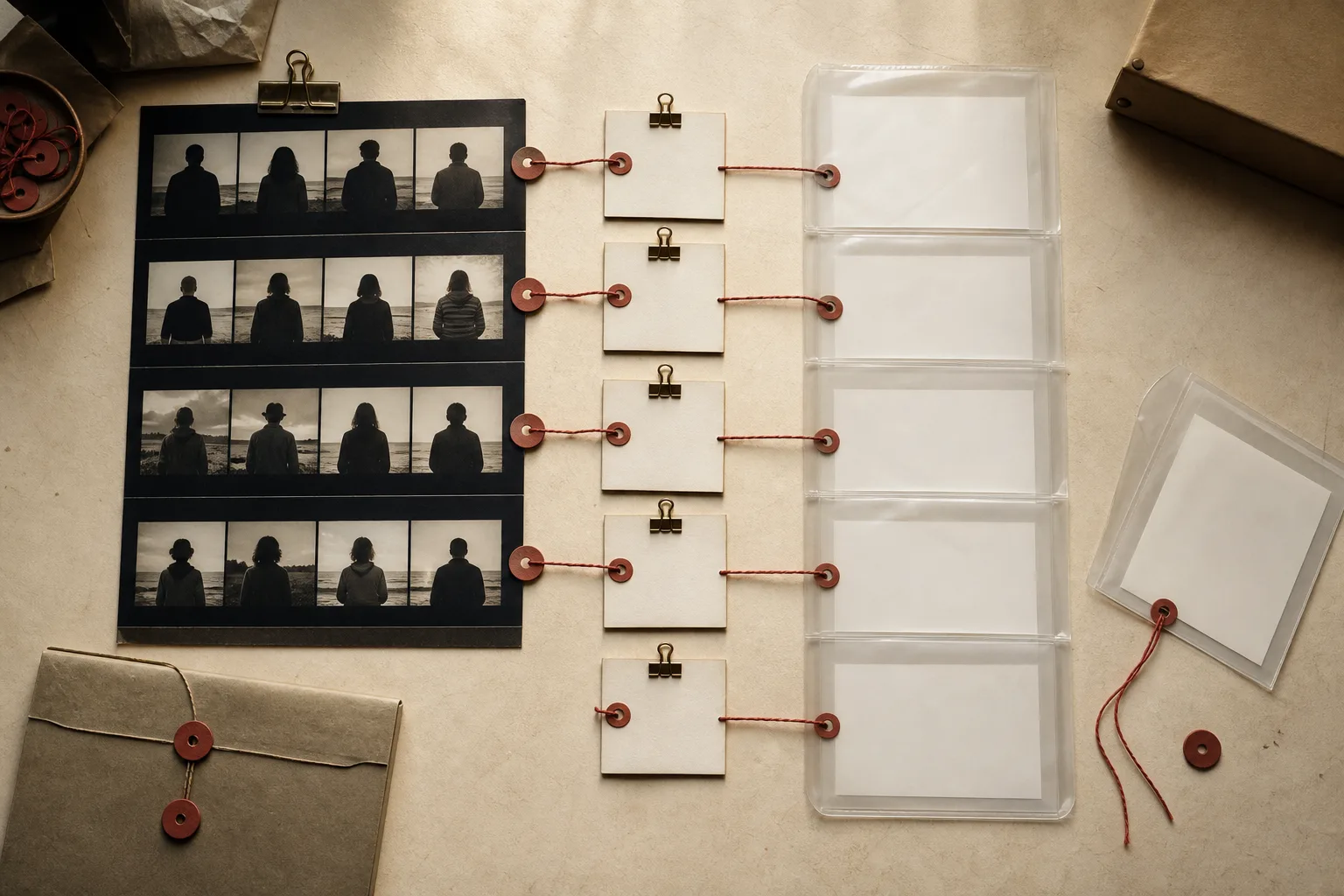
Rights work begins before the call sheet and continues after the files are backed up. The practical goal is not to collect paperwork. It is to make sure the people involved understand the intended use and that every submitted asset can be connected to the correct evidence.
Explain the use before asking for agreement.
Say that the work is intended for stock licensing, may be available to customers internationally, and can appear in commercial contexts you do not choose in advance. Explain compensation, delivery, sensitive concepts, and any limits while the person can still decline without pressure.
“Photography practice” and “commercial stock production” are different propositions. If the purpose changes, the conversation must change too.
Recognizable does not mean face visible.
A person may be identifiable through voice, tattoos, distinctive clothing, body details, companions, or surroundings. Current Adobe Stock guidance, for example, can require a model release even when a face is not shown and for identifiable voices in audio or video.
Review the entire frame and soundtrack. A release for the main subject does not automatically cover a recognizable person passing in the background.
The release belongs to the shoot—not to a convenient filename.
Collect complete records while facts are fresh.
Confirm names, dates, shoot details, signatures, witness requirements, and any special rules for minors using the destination’s current form and checklist. Requirements differ by platform and can change.
Keep a visual reference or other reliable identifier where the platform requires it, but protect personal information. Release files should not be placed in public galleries, shared folders, or delivery packages meant for unrelated people.
Scan the set for rights, not only people.
Logos, packaging, artwork, murals, maps, screens, tattoos, distinctive products, interiors, architecture, and location rules can create separate questions. Removing one logo does not guarantee that the remaining scene is cleared.
Current Adobe guidance treats recognizable people, private property, artwork, and distinctive objects as potential release issues and notes that its restriction lists are not exhaustive. For a specific legal question, use current platform rules and qualified local advice.
Attach evidence by identity, date, and scope.
A model’s name alone is not enough when the same person appears across several shoots. Connect each release to the relevant date, production, participants, and asset group, then verify the match before submission.
If the record is incomplete or ambiguous, hold the asset. Never select the nearest release merely to satisfy an upload field.
Before a people shoot becomes stock
- Explain global stock licensing clearly
- Agree on compensation, delivery, and sensitive uses
- Use the destination’s current release requirements
- Check every person, sound, object, artwork, and location
- Match each asset to the correct rights record
Current examples: Adobe Stock model release requirements and third-party rights guidelines.