01Why I recommend a used full-frame camera
My view is to start with full frame if possible. Paired with a fast prime, it gives you more choices in how you shoot, including dark scenes and moving subjects. However, a full-frame label alone does not determine focus performance, video stability, or ease of operation. Check with the lens you want to use and the settings for the actual shoot.
A used camera with the functions you need can be a candidate even if it is not the latest new model. Look beyond the cheapest listing and consider condition, inspection, and who you can contact with questions. Another option is to use slightly higher-end equipment bought used, then sell and replace it when necessary. This does not guarantee a resale price or a small loss when upgrading.
This does not mean you cannot sell work made with a smartphone or an APS-C camera. You can start if your current equipment can capture the scenes you want and meet the recipient’s image-quality and file requirements. Keep my recommendation separate from what each piece of equipment can actually do.
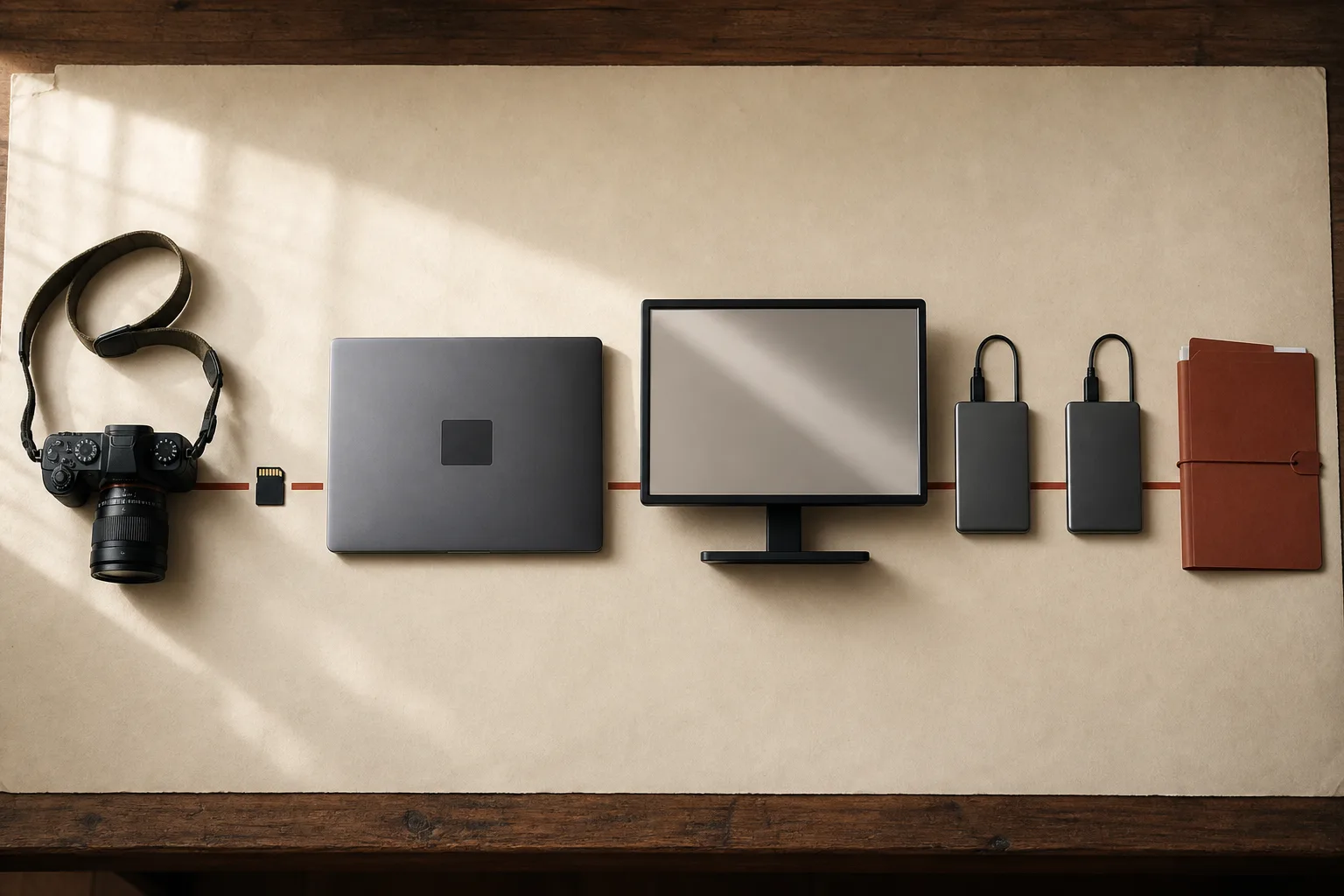
02Sony is my first suggestion, but it is not the only brand you can use
Sony is the first brand I mention. However, I do not think someone who prefers another brand’s color or controls must use only one manufacturer. A camera you like is also a candidate if it takes the lenses you need and lets you keep shooting and finishing your work.
Do not choose by brand alone. Look at body–lens compatibility, focus in actual shooting, video settings, cards, power, and ports together. Even within one manufacturer, available functions differ by generation and model. Once you choose a model, check the manufacturer’s compatibility charts and manual.
Choosing one familiar subject you can photograph repeatedly makes it easier to work out what equipment you need. Try a garden, park, or hands at work, within the places and permissions actually available to you. I would choose equipment that helps me shoot more often in everyday life rather than equipment that sits unused until a special trip.
03Why I recommend a fast prime over a kit lens
I do not recommend a kit lens. Even when considering an expensive zoom, I would prioritize a fast prime at the beginning. Alongside light-gathering ability and a sense of detail, I value moving myself to think about composition, shooting moving subjects in low light, and weight and handling for video. This is not a blanket judgment that every kit lens has poor image quality or every zoom is slow.
A lens that allows a lower f-number can admit more light under otherwise equal conditions. That gives you another setting option when you want to maintain a shutter speed that freezes movement. On the other hand, shooting wide open narrows the depth of field, and you may need to stop down to keep the whole subject in focus. Buying a fast lens does not mean you should always shoot it wide open.
Lens speed, ISO, and the ability to resolve fine detail are different concepts. Raising ISO does not increase the light entering the lens, and the appearance of noise varies with the camera and exposure conditions. Resolving power is not determined by f-number alone, so check actual images at the aperture and focus you will use. Changing your shooting position also changes perspective; it is not the same as changing composition through zoom alone.
04The first lens, later additions, and using two cameras
For a first lens covering both photos and video, I would consider a 35mm. That is my starting point when using full frame. The same focal length gives a different angle of view on a different sensor size, so do not assume another format will produce the same composition.
First, use that one lens to test how close you can get, the area you can cover, and how people and backgrounds fit in the frame. Perhaps you cannot step back indoors, cannot get closer to a distant subject, or want to photograph details at a larger scale. Add another focal length after those specific limitations appear. There is no need to infer model numbers or the equipment I own from focal length alone.
In my experience, using two cameras has advantages, but I do not make it a requirement for beginners. If you use two to reduce lens changes, also account for the extra weight, batteries, cards, synchronized clocks, and duplicate file names during storage. Consider whether it increases your shooting alongside the management work it adds.
05Buying and replacing used equipment: returns, warranties, and checks on arrival
Before buying, write down the functions you want and how you will test them. Check the terms of that particular listing: who accepts returns, how many days you have to inspect it, treatment of initial faults, shipping costs, refund methods, and warranty coverage. Keep the product description, condition details, serial number, and receipt, and complete the necessary tests before confirming receipt or reaching the deadline.
I prefer Amazon as one option when buying new equipment. However, terms differ by seller and product condition. This is not a guarantee of a return period or refund that applies to all products. At the time of purchase, read the current terms from the seller and order screen.
For a camera, test more than whether it powers on: check focus, buttons, ports, every card slot, photos and video, heat, batteries, and whether files display on the computer. For a lens, check focus, aperture, supported stabilization, and multiple focal lengths if it is a zoom. The standard for inspection is whether you can complete the intended shoot from beginning to end.
I once bought a motorized slider in a person-to-person transaction. It worked at first but failed later that same day. After discussion, the purchase price was refunded, but the return shipping and the time spent dealing with it were not recovered. I do not reject every private listing; I want to weigh the inspection and problem-solving work alongside the low price.
My policy is to buy memory cards and storage drives new from retailers with an identifiable contact point. New equipment is not guaranteed to be free of failures, so I test it before a shoot and keep a separate, verified copy afterward. I do not use cards as long-term storage.
In the motorized-slider case, the required refund method also took effort. Another reason I choose new storage media is that past writing, shocks and temperature exposure can be difficult to establish for used media.
06Start with the computer you have; address the parts that slow you down
You do not need to replace your computer with a powerful model at the outset. Import actual material onto the one you have and work through selection, photo adjustments, video playback, export, storage, and submission preparation. Check whether it handles your usual batch, not just whether it can open one image.
Find one stage that stalls every week. By isolating memory, free space, storage location, external drive connections, video formats, cache, and export settings, you may be able to improve things without replacing the computer. If you use video proxy files, include the time and space needed to create them in your checks.
Screen color and brightness, ports for cards and drives, and upload speed also affect the work. Check whether you are adding too many adapters or concentrating connections on a single port. Prioritize the wait involved in finishing everyday work over an exceptional task you do once a year.
07Simultaneous card recording, power and charging, mounting, and maintenance
I place importance on simultaneous recording to cards. However, having two slots does not necessarily mean you can make identical recordings for photos or the video format you want. Check compatible cards, recording destinations, and modes in the manual, and open the actual files on both cards. Simultaneous recording does not replace the whole backup process, including storage on separate media and restoration.
With batteries, decide not only how many to carry but also how to keep charged and used ones separate. Use compartments, cases, or orientation to distinguish them. Recording individual battery numbers and replacement times can help identify one that drains faster than the others under the same conditions. Follow the manufacturer’s precautions for hot or abnormal batteries; stop using and charging a battery with swelling or damage, and check what to do. Base storage methods on the manual as well.
Treat charging during breaks and supplying power while shooting separately. Do not assume a power source’s stated capacity is all usable; test runtime at the actual shooting settings, including conversion losses and temperature. Check the power source, cable, adapters, and equipment as a set, including whether output allocation changes when several devices are used at once. Decide the charging order starting with equipment you cannot afford to have stop, and prepare for important shoots without relying on just one charging method.
Standardize quick-release fittings starting with the combinations you frequently swap between, such as camera, head, tripod, and gimbal. Test not only whether the shapes fit but also load and center of gravity, twisting in portrait orientation, and interference with the battery compartment, screen, ports, and cables. Use a consistent check: insert, lock, gently check it cannot come out, and inspect screws. Keep the necessary screws, wrenches, and spacers together too.
After a shoot, inspect for sand, dust, and moisture, and check lenses, contacts, covers, ports, plates, and straps. Follow the equipment’s manual for care. For problems such as an intermittently unresponsive button, record when they occur, the settings, the equipment combination, and conditions that reproduce them. If there is unusual heat or smell, an impact, or water ingress, stop using the equipment and consult the manufacturer or repair service.
When arranging repair, check what may change the estimate, how data and settings will be handled, parts, the post-repair warranty, and the expected return time. Protect the card’s contents, and remove the card unless instructed otherwise. Record the serial number, exterior condition, and included items, and save any settings that can be saved. Follow the repair service’s and carrier’s rules for shipping batteries.
When the equipment returns, check the body and accessories, the reported problem, focus, exposure, stabilization, ports, cards, and recording formats. Review the date and time, file numbering, firmware, button settings, and copyright information too. Assemble it with the lens and microphone you will use and make a test recording. Finish maintenance and checks before taking it to the next shoot.
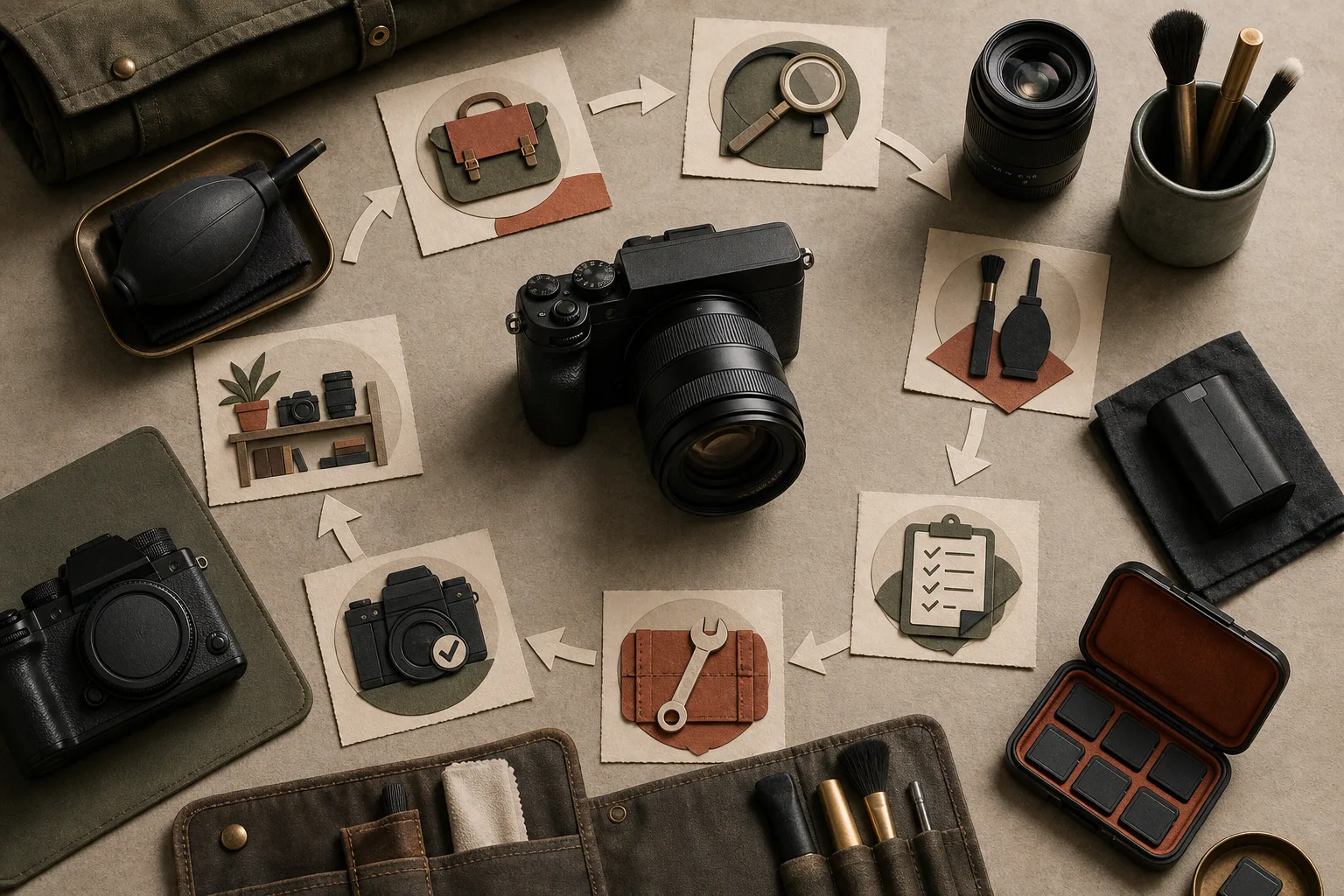
Let a hot battery cool as directed by its manufacturer before charging, and use a compatible charger. Do not charge inside cloth or a bag. Check charge and condition before departure, and log use start, replacement time, charge and abnormalities by battery ID. Do not keep relying on a weakened battery for important shoots.
Remove loose sand first and dry damp equipment before storage. Check storage conditions, since a bag may be unsuitable for long-term storage. Choose a repair provider with warranty, sealing and firmware considerations in mind. Send only the requested items, and keep the estimate, shipping record and repair report together.
Before formatting a card, open the copy stored elsewhere and check that backups exist in two locations. Assess tripod stability on the actual ground and in the wind. Decide replacement points for consumables in advance, and follow the equipment’s instructions for heat, cold, water and impacts.
List plates, supports, adapters and required tools for each setup. Include safety stops or other fall-prevention parts, keep parts separated by equipment, and avoid stacking too many adapters. Recheck compatibility and looseness after a configuration change.