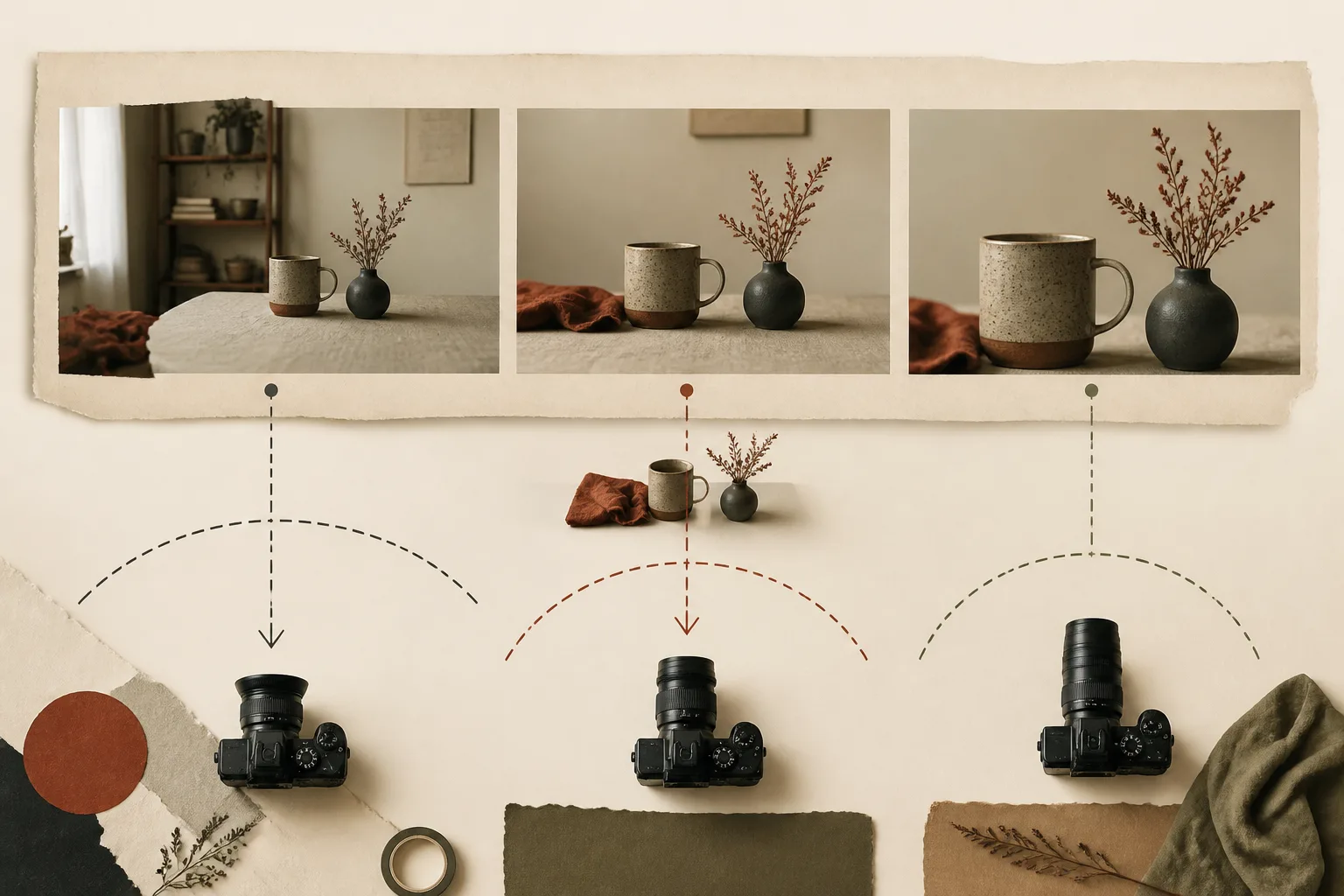
Focal length changes angle of view, but perspective is driven by the relationship between camera and subject. In a small room, active public space, or people shoot, the preferred camera position may not be available. Choose a lens inside the physical conditions of the job.
Measure how close and how far the camera can move.
Check walls, furniture, public routes, access boundaries, and safe crew movement. With people, include the distance required for clear direction and a comfortable interaction.
Do not choose a lens and then force the location to serve it. Find the focal range that produces the required frame from a usable position.
Match subject size before comparing perspective.
A wider lens used closer tends to emphasize near-to-far size differences and includes more of the surroundings. A longer lens used farther away narrows the background and makes those differences appear gentler.
Compare lenses with the subject framed at a similar size. Otherwise, magnification and camera position become confused.
Include the background you can realistically control.
A wide view may capture floors, ceilings, lights, signs, passersby, and uncleared property. A longer view can narrow the background, but it requires more distance.
Do not use blur as the only rights or cleanup strategy. Build a safe, clear frame first.
Choose focal length from the camera position—not from the number alone.
Test focus, motion, light, and support together.
Longer focal lengths can make small movements more visible and may require a faster shutter or steadier support. Wide apertures can also leave less depth acceptably sharp.
Test the complete lens-and-camera setup under light and movement close to the actual production.
Count the useful roles one lens can complete.
Try the establishing view, primary action, essential detail, vertical frame, and copy-space composition. Judge the lens by finished roles, not by how often it is changed.
If several lenses are necessary, plan when they change. Handling time, dust exposure, transport, and missed moments are part of production cost.
A practical sequence
- Map the available camera positions
- Define the required subject size
- Compare perspective and background coverage
- Test light, motion, focus, and support
- Confirm the useful frames the lens can complete